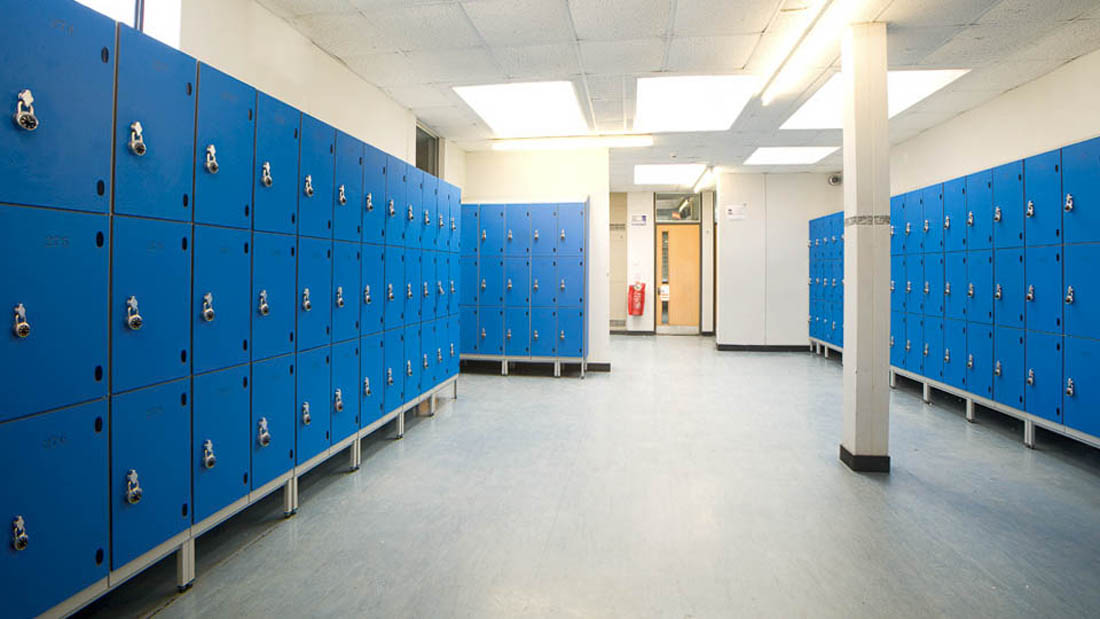
Guidance on Cleaning Your Lockers
Whether it’s at school, at the gym, or even at work, lockers are a fundamental part of our everyday life. Lockers may gather relentless stains and smudges over time, not only making the environment unpleasant but also making it unsanitary. In this blog, we’ll give you guidance through the locker cleaning procedure and provide you with practical advice for removing all types of stains and smudges.
Guidance for Cleaning your lockers
Step 1. Use a damp cloth or sponge and a little soap or detergent for a general cleaning. After finishing, rinse and dry the panels.
Step 2: For tough strains apply a gentle home cleanser or detergent and a soft-bristled brush.
Step 3: If tough stains remain the same, apply a non-scratch cleanser like Cif or Flash while softly scrubbing the stain for 10 to 20 seconds.
Step 4: If the stain still exists, use household bleach that has not been diluted, let it sit for no more than two minutes, and then thoroughly rinse with warm water. Do not expose laminate to household bleach and it may result in irreversible discoloration.
Step 5: Use a mildly abrasive cream cleanser to gently scrub the surface if it has been discoloured due to prolonged contact with industrial grime.
Do and Do Not
- Do not use acidic or abrasive cleaners.
- DO always rinse thoroughly after cleaning (residue from cleaning solutions is
- the single greatest cause of damage to glass and laminate surfaces).
- Do wipe up spills immediately and rinse thoroughly.
- DO NOT use acidic or abrasive cleaners, expose the glass or laminate to household bleach for prolonged periods of time, or apply excessive scrubbing.
Laminate and Glass Locker Doors.
With the Laminate and Glass locker doors always start by trying the gentlest method of cleaning. If a stain persists work through the following steps, repeating each step several times if the stain seems to be disappearing.
Metal Lockers
For metal lockers and lockers with metal bodies, it is essential to lubricate the hinges and locks on occasion. This will mostly rely on the location of the lockers and how often their owners use them. If they are used frequently, it is wise to routinely inspect the hinges and locks, which should be greased or repaired as necessary.
Conclusion
Cleaning lockers may be difficult, especially when dealing with stains and smudges that won’t go away. However, by the instructions provided you can successfully get rid of those undesirable markings and keep your lockers clean and sanitary. To keep your Locker looking good for a long time, keep in mind to use the appropriate cleaning solutions, be patient with difficult stains, and take preventative actions. With these suggestions, you can make your locker maintain a neat environment that is both practical and aesthetically pleasing.



Why should you invest in carbon-neutral lockers?
Here at Helmsman, we are passionate about manufacturing our clients with bespoke laminate lockers. We provide our clients with the best quality products by building strong partnerships with our suppliers that have the thought of the environment in mind. Due to the environmental issues and global events, we would like to agree that it has made us aware of our decision and increased our protection of the environment.
We have a new partnership with Abet Laminate. Abet Laminate has the thought of environment in mind with the laminate products they provide for clients. As the laminate consists of 70% cellulose and 30% thermosetting resins which can state that the material isn’t classified as a dangerous material for the environment.
We additionally have a partnership with BioCarbon Laminates, which provides sustainable laminate solutions including carbon-neutral laminates. The products are produced in a carbon-neutral manufacturing facility that monitors, controls, and balances carbon emissions reducing them to zero.
Investing in carbon-neutral laminates is a way to reduce carbon emissions which takes part in harming the environment. By investing in purchasing carbon-neutral laminates, it is a way to help the environment such as letting trees absorb carbon.
At Helmsman we provide materials such as Solid Grade Laminate, Glass, Timber, and Metal, which can be recyclable. The material we use to make our products has a long-lasting shelf life which is beneficial for the earth.
We want to make a difference and protect the environment by providing carbon-neutral and other materials that is recyclable for our lockers. To find out more about bespoke lockers that are carbon neutral contact us or call us 01284 530421.

Choosing Lockers for your Project
With so many different styles of lockers out there in different combinations and finishes, we thought it would be useful to explain the different types and uses to help you choose the best lockers for your project.
Gone are the days of rows upon rows of metal school lockers in drab metallic grey and padlock clasps. The choices now for locker specifications are almost limitless giving architects and designers plenty of the scope to realise their creative schemes.
Material: Aluminium, Laminate, Glass – the list is endless.
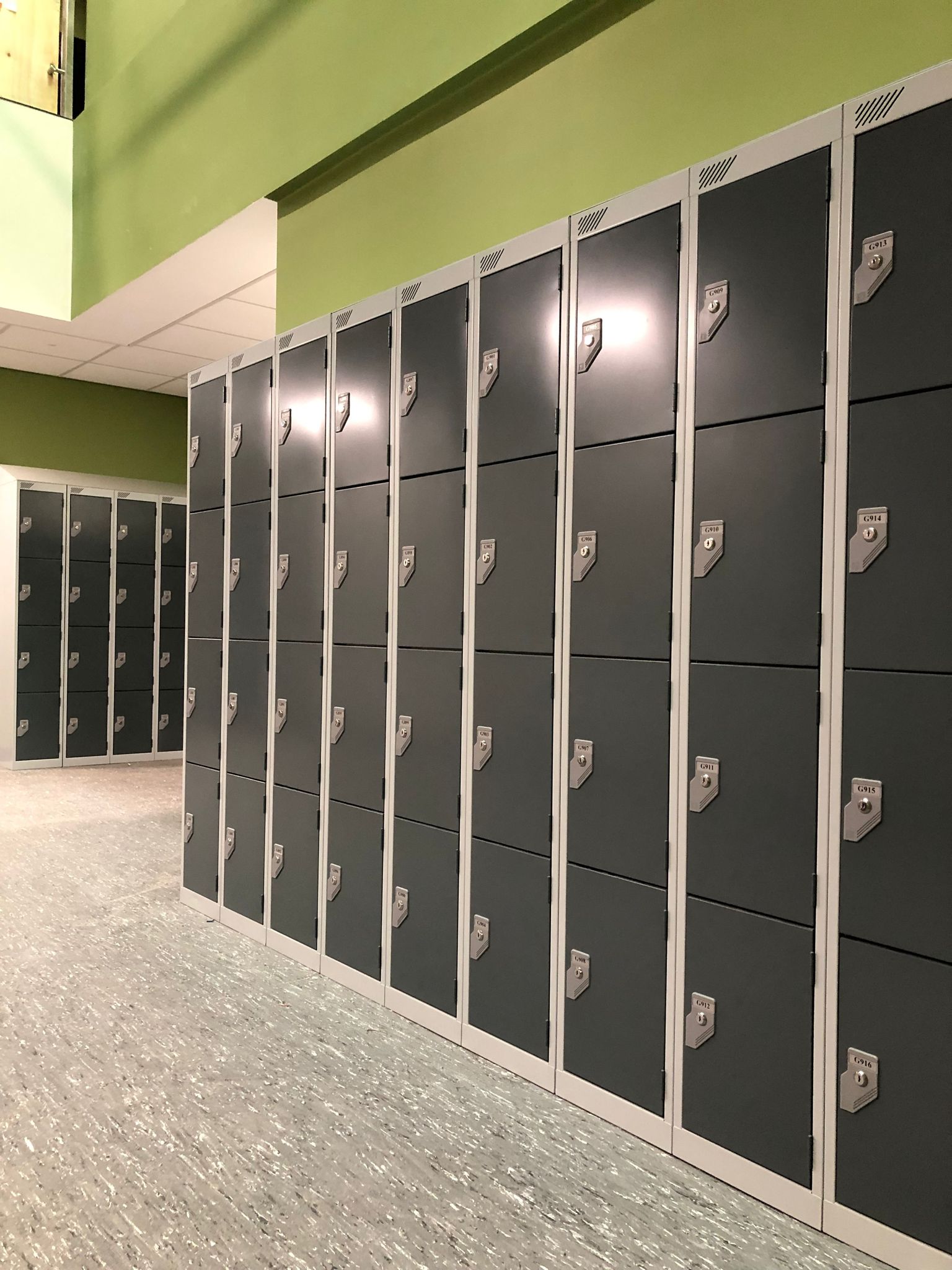
Locker carcasses are traditionally manufactured from aluminium, galvanised steel or stainless steel depending on the area of usage. This is then coupled with a door made from the same material or with compact grade laminate or glass. Banks of lockers are manufactured together with shared side walls and are frequently manufactured with a sloped top to stop the accumulation of litter or clutter and to aid cleaning.
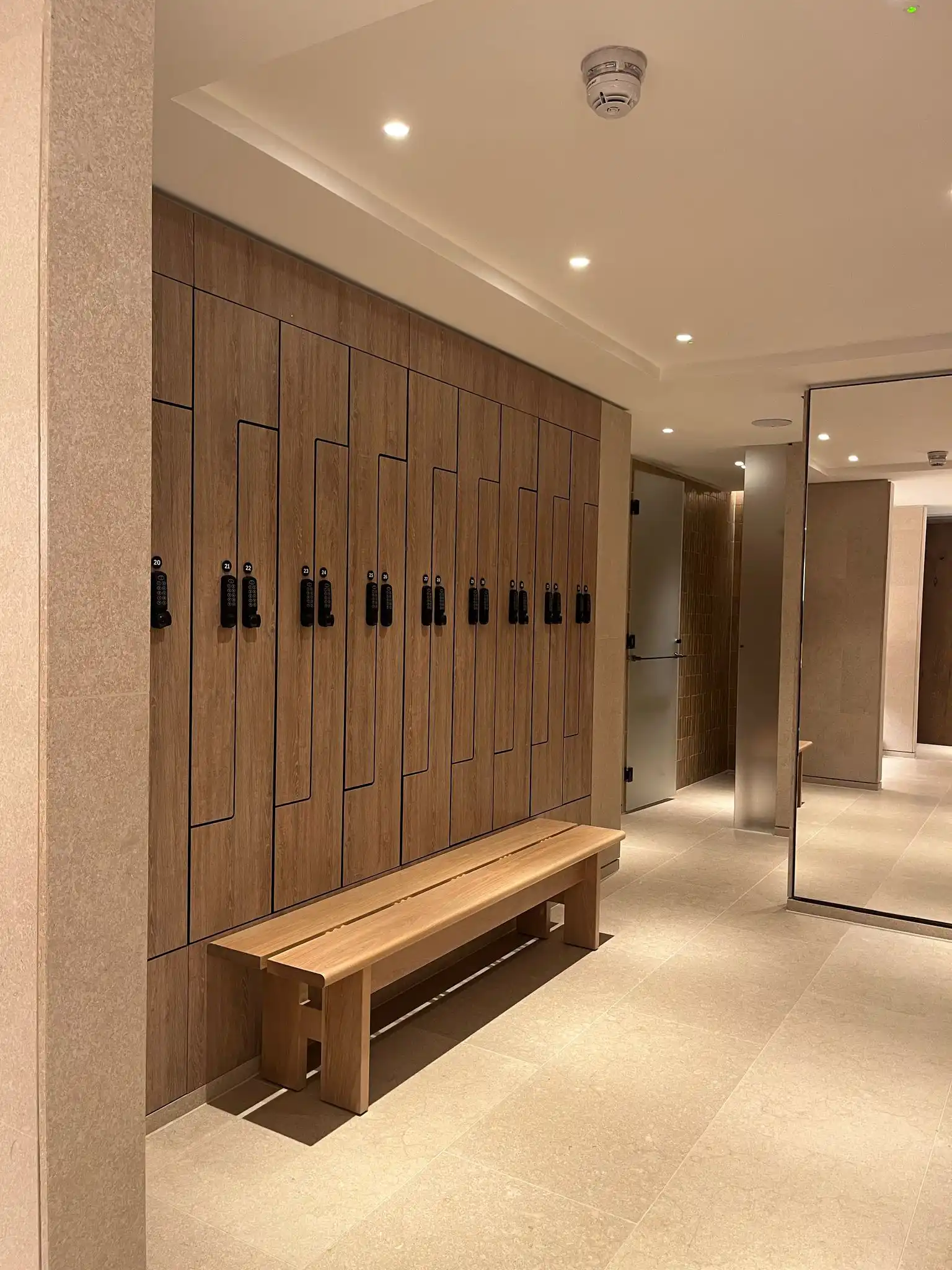
The configuration of the lockers can be incredibly varied as can be the locking systems they employ. They can be full height, Z Lockers or multi-compartment with other options such as charging lockers and garment dispensers. Vents and vision panels can also be incorporated to encourage airflow or for areas at high risk such as museums and stations where visual inspection is needed.
Full height lockers are exactly that, lockers that have one opening the entire height of the locker bank. Internal compartments can be added as well as shelves and hanging ability and these are lockers in the purest form. Z Lockers are designed where space is an issue as they maximise capacity in the most efficient way. Each has a garment hanging sector and space for bags or personal items.
Size
Most people don’t realise lockers are designed around the user and the application. Standard lockers are 1775mm high while in schools, for example, lockers tend to be 1 to 3 compartments and are manufactured to different sizes depending on the age. Key Stage 1 lockers are 1250mm high while Key Stage 2 lockers are 1600mm high. Other factors such as height, width and depth are determined by the alcove or space where they’re going to be situated. Helmsman manufactures most of its lockers to size and exact specification.
A Splash of Colour
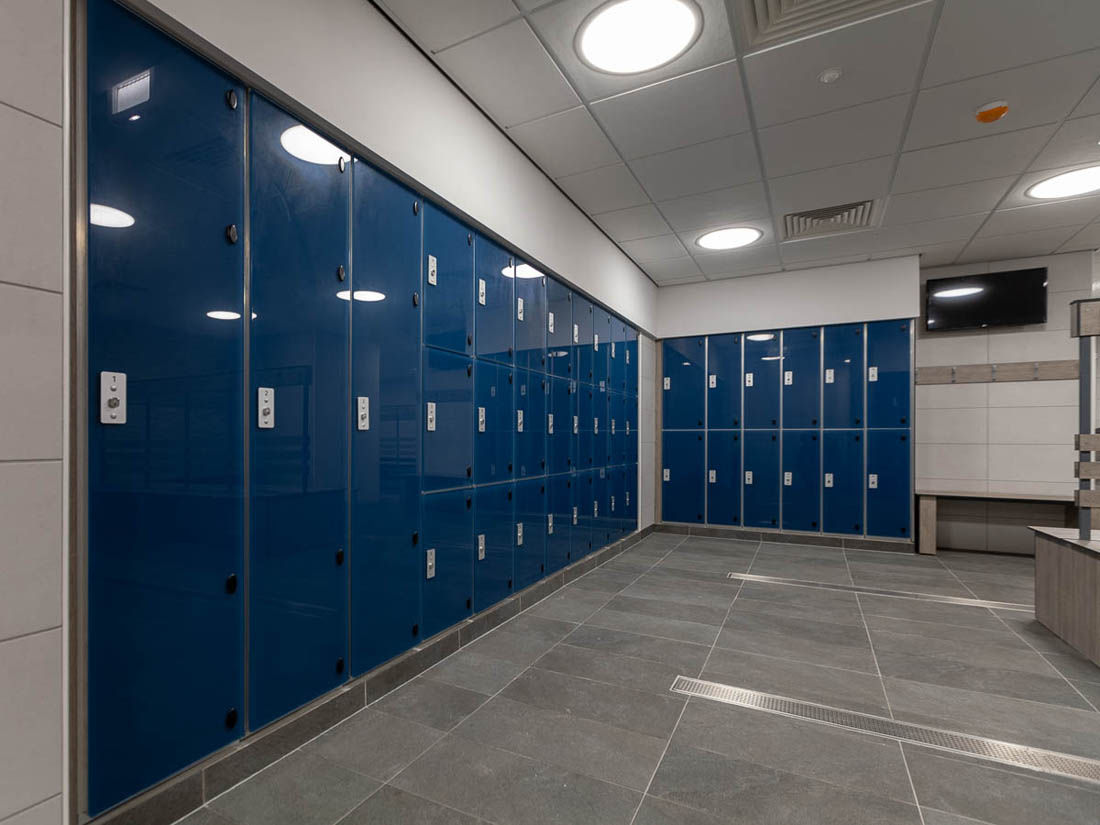
Lockers can be manufactured from metal, laminate or glass depending on their use. If you’re looking for clean-cut lines and a contemporary look then glass lockers may be the solution. A relatively new concept, they comprise an aluminium locker body with solid grade laminate door and then over-clad with tempered glass. Alternatively, RAL coloured glass is used for the doors.
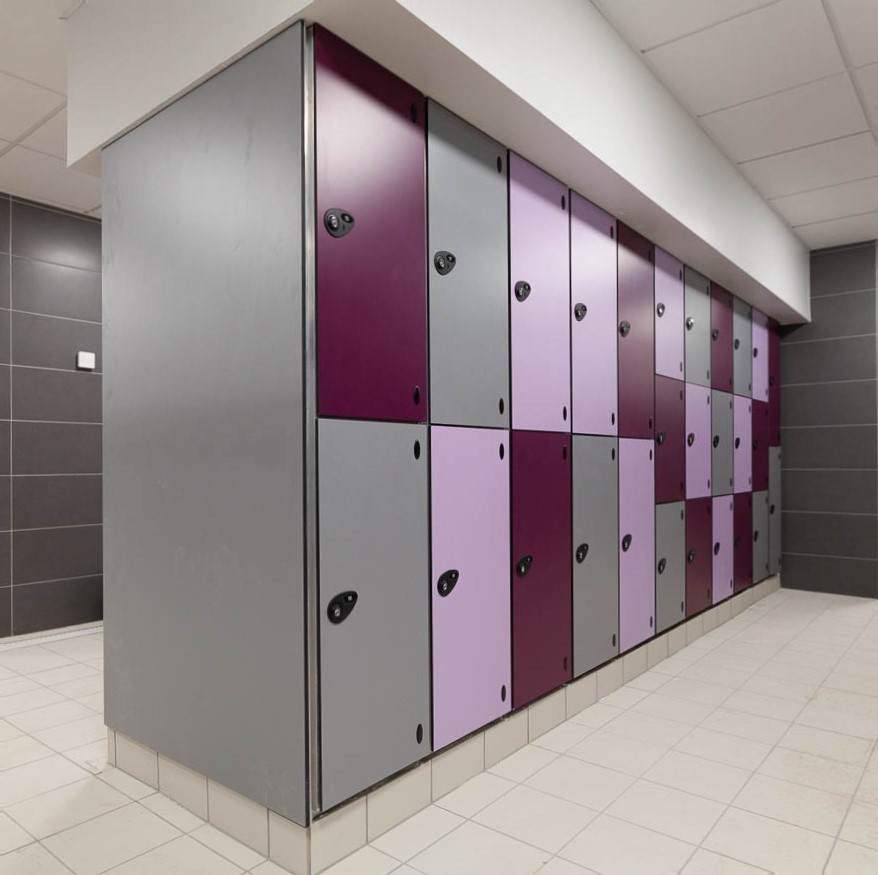
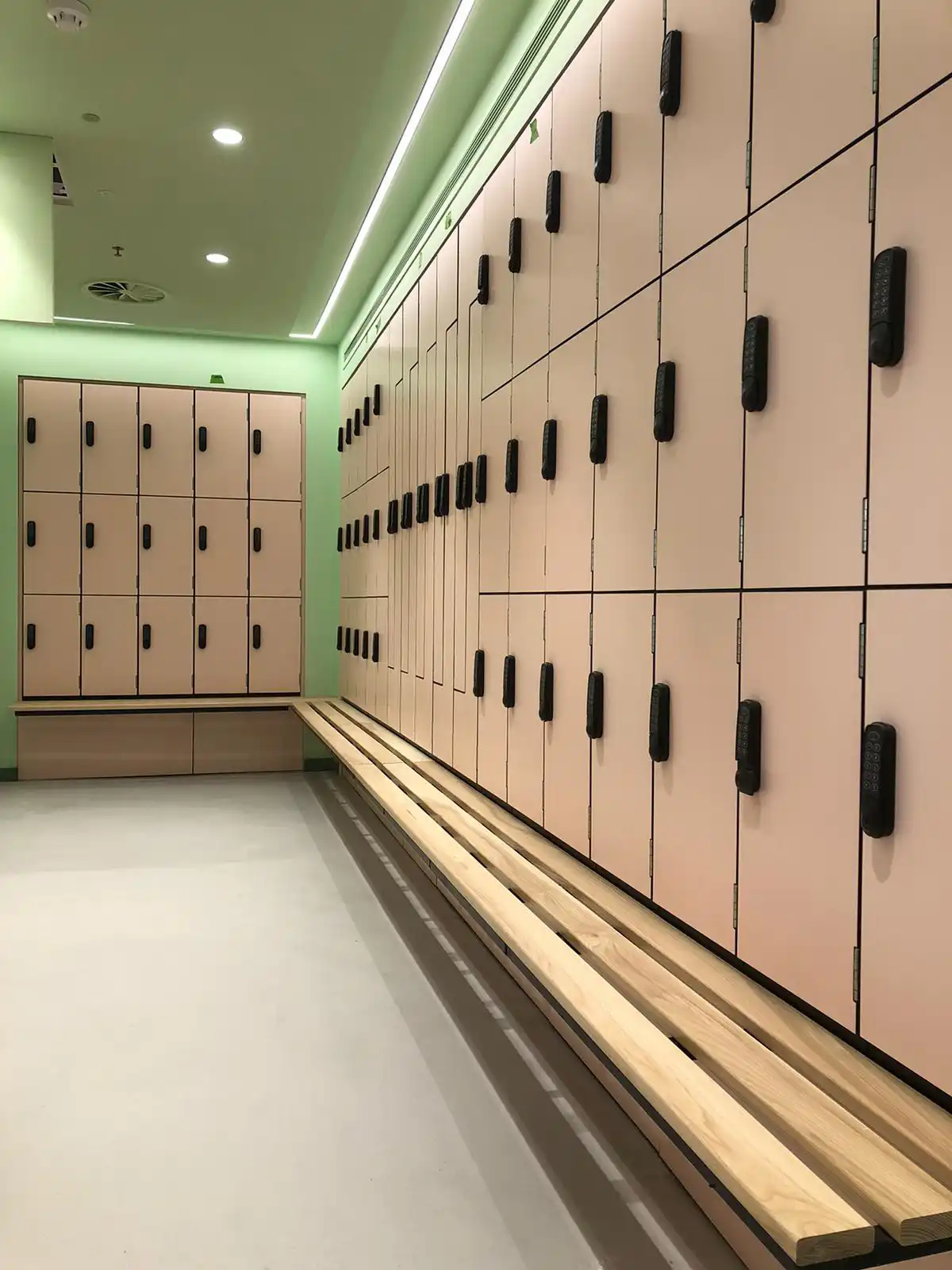
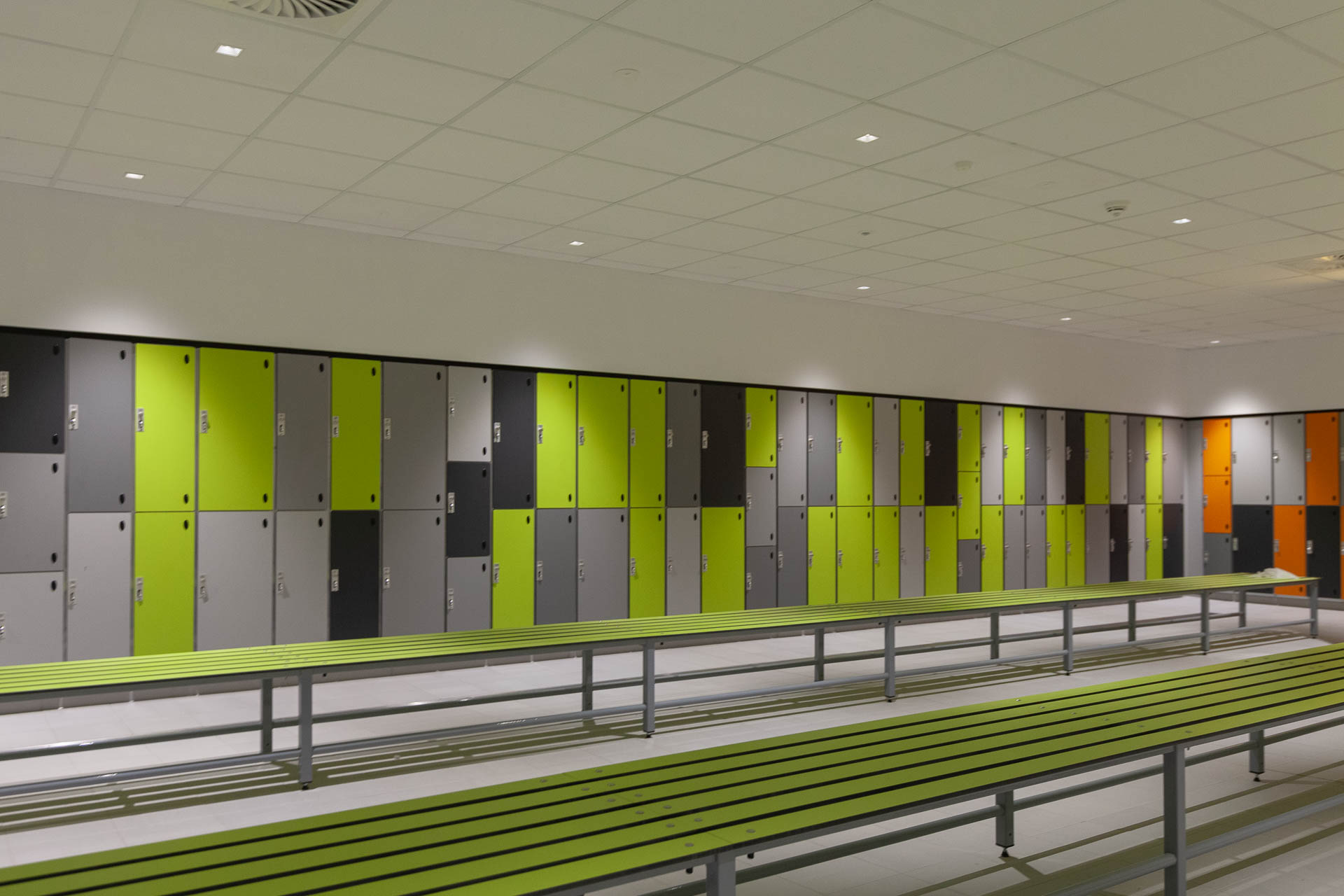
Laminate lockers offer unparalleled options in terms of colours, designs and styles. Compact grade high-pressure laminate is incredibly robust, strong and secure and is a perfect choice for areas prone to high moisture and humidity as there is no risk of peeling, cracking or delamination. They are fully self-supporting, are easy to work with for cutting and fabrication and have resistance to wear, impact and scratching. See our colour options here.
Usage
From schools, universities, leisure centres, wet area changing rooms and retail parks through to staff rooms, emergency services and prisons, lockers are unique to their use.
For example, charging lockers are becoming more commonplace. These small lockers are manufactured with various compartment doors i.e. 5, 10, 12, 15, 20, 28, 30 and 40 and come complete with plugs and USB sockets to safely store phones, tablets and laptops or power tools while charging them at the same time.
Anti-bacterial and anti-microbial lockers are popular in areas at risk from cross-contamination and for clean rooms; while food processing plants often also include perforated shelves means they can be hosed down at the end of each shift.
In the pharmaceutical industry, stainless steel lockers are popular as they can withstand almost any cleaning solution and chemicals that are used for sanitisation and therefore is used as their preferred material for lockers.
Garment Dispensers and Collectors are lockers designed to allow employees to collect clean garments while soiled clothing is collected centrally through another locker into a serviced laundry bag. This system ensures that clean laundry for the individual employee is secure and ready for collection at any time of the day or night and not compromised by soiled clothing.
More information on lockers and specification as well as cubicles, vanity units and seating are available from Helmsman, please contact us.
In the meantime, keep an eye on LinkedIn and Twitter for the latest projects, news and updates.